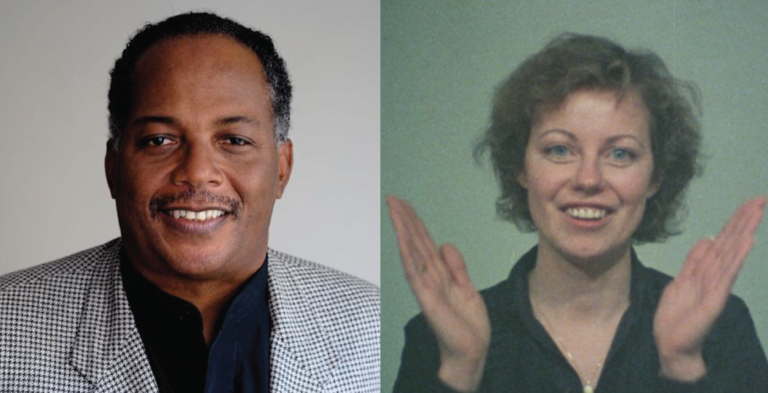
Dedicated to Errol Williams (1951-2007) and Linda Joy Busby (1950-1985)
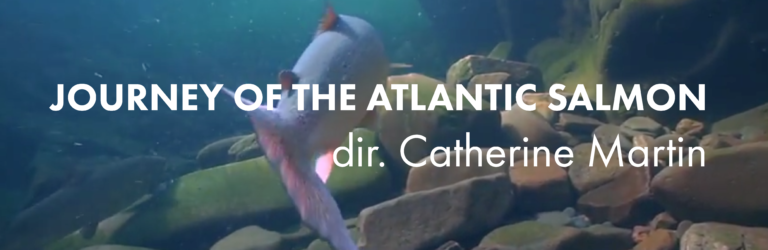
The Journey of the Atlantic Salmon, produced and directed by celebrated filmmaker Catherine Martin, O.C., in 2014, may seem to the casual viewer an odd choice for this streaming program, and more, an unusual way to begin.
It is not. My choice is considered and deliberate. AFCOOP is located in Kjipuktuk in Mi’kma’ki, the ancestral and unceded territory of the Mi’kmaq.
Before European contact and colonisation, Mi’kmaq traveled freely throughout their territory, catching the gift of Atlantic salmon. Ever conscious of the importance of conservation, they used only what they needed. This harvest offers an example of the respectful, spiritual relationship the Mi’kmaq cultivated with the natural environment. There is much we can learn from that relationship if we choose to.
We have little time left.
Films in this program stream reflect my eclectic interests and my personal engagement with the selected filmmakers. The mid-1980s to the early 1990s were fertile times for film and video making in Nova Scotia. As a student of the archive and an advocate for preservation and promotion, I am pleased to present this selection of work.
Language shapes experience. In Maigre Dog (1990), Donna James foregrounds and pays tribute to the vernacular language of the Jamaican women who nurtured her growing up. She presents their authentic voices, their rich talk, and stories about their full lives. Maigre Dog underscores the centrality of oral history in the culture of African peoples.
Who remembers IWY, International Women’s Year? 1975. I do. I’d just moved back to Halifax and became involved in all manner of activities, events and organizations. It was a moment. I had a muted golden yellow t-shirt, printed with the phrase: Uppity Women Unite. Because Black people, and Black women in particular, were accused both directly and indirectly of being too ‘uppity.’ I wore it proudly.
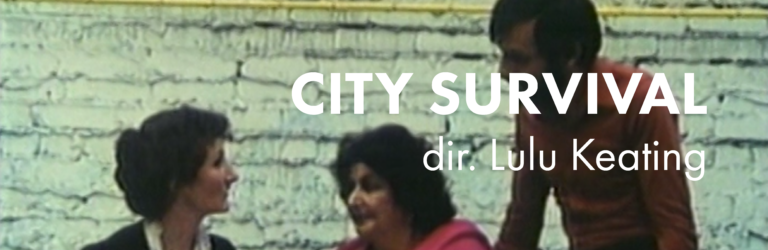
Lulu Keating’s City Survival (1984) follows the adventures of a small-town girl who leaves home for an urban centre. It’s all so new and overwhelming. Sometimes she’s lonely. My own story has a similar trajectory. I took a job in Ottawa when I was in my early 20s. I moved there without family or friends and had some adventures of my own.
At the height of the anti-South African apartheid struggles in the ‘80s, people across the world raised voices and fists, boycotted South African wine and other goods, marched, demonstrated, wrote letters and petitions, called for sanctions—all in a vociferous effort to end the ruthless white-supremacist regime.
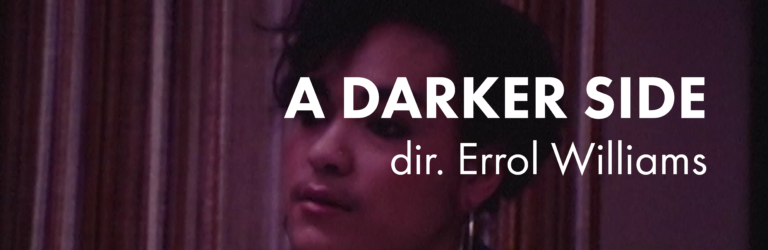
A Darker Side (1991), a short, poignant drama by the late Errol Williams, shows viewers that struggle through the eyes of a young Black female activist living in exile in small-town Canada. She tries to enlist the help of a talented Black photographer who doesn’t see how the struggle, so far away, affects him.
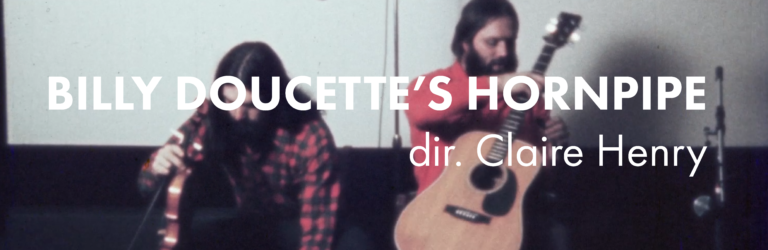
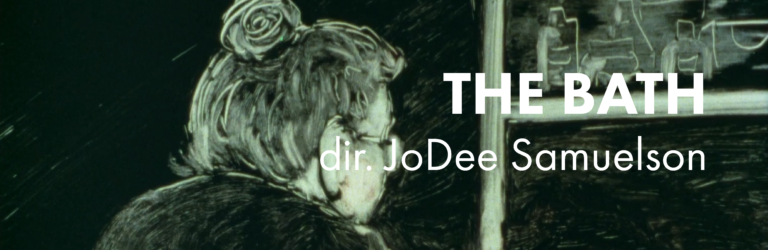
Animated films are a gift to our imagination. In this program there are two: Billy Doucette’s Hornpipe (1984), a whimsical short, directed by Claire Henry (Nova Scotia), and the ever charming The Bath (1992 ), by JoDee Samuelson (PEI). I have a fondness and admiration for both filmmakers, and for the care and focus needed to create this work.
In 1990, the Canadian Congress for Learning Opportunities for Women, known by the acronym CCLOW (Nova Scotia Chapter), published a booklet titled Groups Dynamic: A Collection of Her Stories. Included were three women’s film/video groups: Reel Life, Women and Video Exploration (WAVE) and the Ad Hoc Women’s Film Group. Claire and I wrote the entry for this latter group. My involvement in this group helped me develop my first film, Black Mother Black Daughter, for which Claire was the editor.
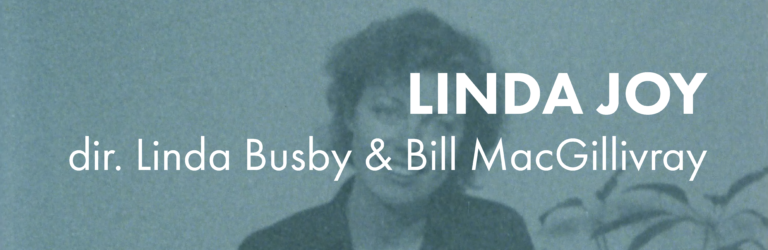
Over the years I’ve interviewed many elders for my films; I’ve been impressed by their ability to recall events with detail and precision. I am not always able to do likewise. Sometimes I grab a memory only to have it disappear or recede moments later. I’ve tried to remember when and where I first met Linda Joy Busby. If it was at AFCOOP, or Reel Life, or the Ad Hoc Women’s Film Group? I don’t know. What I do know is I remember the light she exuded. At the time, it was with great sadness that I, like many others, learned of her terminal cancer diagnosis. A fearsome moment. But for Linda it was the opportunity to use film to document her journey, so it could be shared with others. Linda Joy (1985) is her story. As Linda Joy’s good friend and co-director, Bill McGillvary recalls, “…the most important elements in the film are Linda’s bravery and optimism, her reflections on family and her angry Female Fight against the 1980s patriarchal medical system. Very prescient.” Bravery, but I also think kindness and generosity, are required to share such an intimate and painful story with the world.
We need more kindness and generosity to flow from all of us.
I hope you are informed, charmed, and encouraged to explore more work by film and video makers from the Atlantic region. Thanks for watching.
Sylvia D. Hamilton
Curator
WATCH THE FILMS HERE: