* Content Warning: Porpoise Oil deals with the harvesting of a porpoise.
This program is a conversation about relationships between Mi’kmaq, filmmaking, and storytelling. Each film has been selected to showcase how these relationships have evolved and changed over time, and continue to change to this day.
Film is an art form in its infancy, especially compared to the long relationship between the land and the Mi’kmaq. Still, there is a natural place where storytelling and filmmaking intersect. This new relationship must be encouraged, nurtured, and given space to grow. Part of that is understanding how storytelling has evolved over time. These films provide context for that evolution.
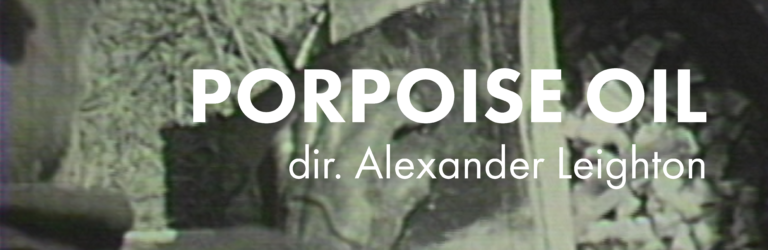
The first film in our conversation is Porpoise Oil (1936). Filmed in kespukwitk district of Mi’kma’ki, it is one of the oldest films highlighting Mi’kmaw people and culture. It was filmed by Dr. Alexander Leighton after he happened to witness Mi’kmaq harvesting a porpoise, and deals with preparing meat and the rich oil of the blubber.
Though not filmed by a Mi’kmaw person, the film is important to community not only because of the practices it contains, but the people it shows. The relationship between the People and the land is as clear as the joy the community takes in preparing the porpoise itself.
It’s worth mentioning the odd ending that seems out of place with how Mi’kmaq would behave. This part of the film feels the most contrived and made up for the sake of having an easy ending, as it portrays a wasteful sense that doesn’t line up with good relationships with the land and animals.
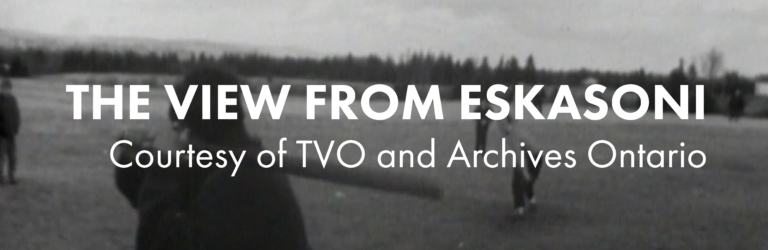
Next in our conversation comes The View from Eskasoni (1970). This was created as an educational video and hasn’t been widely seen until recently. In this film we have non-Indigenous people coming from the outside and making observations and conclusions that serve their own ends. However, it’s important to note the value in this story that comes in the form of friends, family, and community members (who inspire and spark the memory of many other stories).
Seeing life unfold in Eskasoni during this era gives insight into how communities change and grow. The influence of government and other colonial systems can be seen mixed in among happy faces and personal thoughts and dreams.
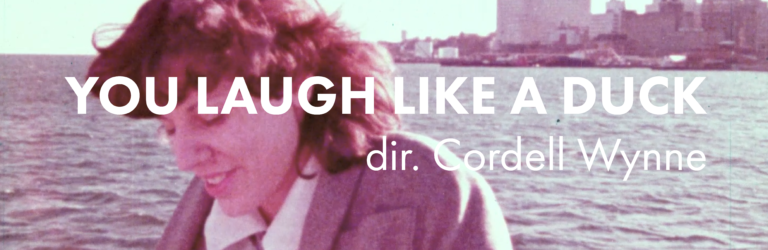
You Laugh Like A Duck (1980) follows next. An interesting film that looks at the lives of children from different communities in both Manitoba and Nova Scotia. Though the glimpse of the community is shorter than some of the other films, there’s important language and ideas that contribute to our conversation and the changing attitudes of Mi’kmaq—and the pride and language that remains.
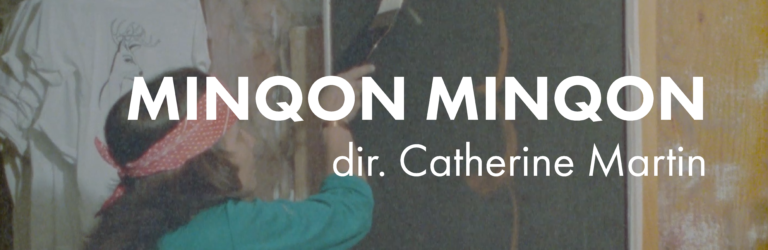
Minqon Minqon: Wosqotmn Elsonwagon (1990) by celebrated filmmaker Cathy Martin, is a first for our conversation—a film made by a Mi’kmaw director about the artist Shirley Bear and her paintings.
Hearing Shirley Bear speak about her relationship to the creative spirit is an important insight into understanding the world from more than a Western, colonial perspective. Shirley speaks about fasting and focusing on the stories and lessons that come to her, to give them space and respect. Cathy Martin has a similar respect towards Shirley and her art, showing her beautiful paintings and making space for her voice.
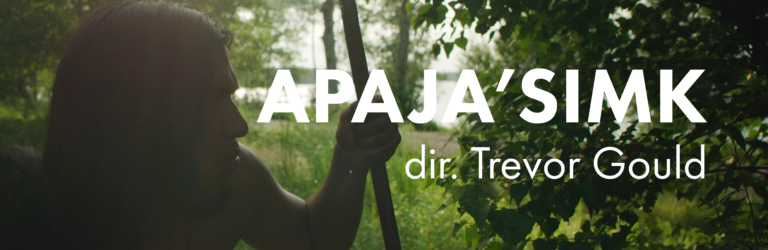
Following that is Apaja’simk (2018) by Trevor Gould. This film was made through the Languages of Nova Scotia program at AFCOOP. It’s a new film the represents the beginnings of a relationship between the Atlantic Filmmakers Cooperative and Mi’kmaw storytellers / filmmakers. Out of all the films in our conversation, Apaja’simk is a bridge that shows Mi’kmaw culture and language through the perspective of a community member.
Like the films that come before it, the conversation of evolving attitudes and relationships is at the core of this story. In a way this film closes a loop in a circle that continues ever onward. Looking back to Porpoise Oil in comparison, this film is made my a Mi’kmaw filmmaker, in the language, about the people. There is care and hope in every frame. Apaja’simk shows that language may have changed, the People may have changed, but memories and culture run deep.
Here our conversation comes to rest for the time being, but it never really stops. It continues on and evolves as everything grows around us. In this land governed by the Treaties of Peace and Friendship we can only hope that the next conversation we have shows a deeper relationship, deeper understanding and appreciation for each other and the Mi’kmaw language and culture, for many generations into the future.
I hope you’ve enjoyed having this little conversation. Carry it with you next time you’re walking in the forest, or in the park. And if you can get your hands on some spruce tea, and take some time to think, that’s always a treat.
Bretten Hannam
Curator
WATCH THE FILMS HERE: